The Latest Research on Medicinal Mushrooms, Gut Health and Brain Function
New Research Reveals How Medicinal Mushrooms May Support Both Gut and Brain Health
For years, medicinal mushrooms have been studied for their effects on immunity, cognition, and overall wellness. However, some of the most exciting discoveries emerging from recent research are focusing on something unexpected: the relationship between mushrooms, the gut microbiome, and the brain.
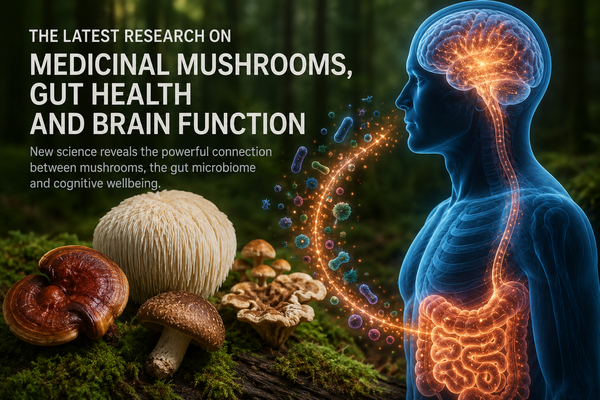
Scientists are increasingly recognizing that the gut and brain are closely connected through what is known as the gut-brain axis. This communication network allows the digestive system, immune system, and nervous system to influence one another in ways researchers are only beginning to understand.
Recent studies suggest that certain medicinal mushrooms may play a role in supporting this complex relationship.
The Gut: More Than Just Digestion
The human digestive tract is home to trillions of microorganisms collectively known as the gut microbiome. These microbes help digest food, regulate immune function, produce important compounds, and even influence mood and cognitive function.
When the balance of these microbes is disrupted, it has been linked to a growing list of health concerns, including digestive disorders, inflammation, poor immune function, anxiety, and cognitive decline.
Researchers are now investigating how natural compounds found in medicinal mushrooms may help promote a healthier and more diverse gut microbiome.
What Makes Mushrooms Different?
Medicinal mushrooms contain unique compounds, including beta-glucans, polysaccharides, terpenoids, and other bioactive molecules that appear to interact with the microbiome in beneficial ways.
A major scientific review published in 2025 examined how edible and medicinal fungi may help support gut health. Researchers found evidence that mushroom-derived compounds can help encourage beneficial bacteria, support the intestinal barrier, and contribute to healthy immune regulation.
Rather than acting like traditional probiotics, medicinal mushrooms appear to function more like prebiotics — providing nutrients that beneficial microbes can use and thrive on.
Beyond Lion's Mane: Other Mushrooms Under Investigation
While Lion's Mane often receives the most attention for its potential effects on cognitive health, researchers are also investigating several other medicinal mushrooms for their relationship with the gut microbiome and immune system.
Turkey Tail contains naturally occurring polysaccharides that have been widely studied for their interaction with beneficial gut bacteria and immune function. Its rich beta-glucan content has made it one of the most researched medicinal mushrooms in the world.
Chaga is another mushroom attracting scientific interest due to its abundance of antioxidants and bioactive compounds. Researchers are exploring how these compounds may contribute to healthy inflammatory responses and overall gut ecosystem balance.
Reishi and Cordyceps are also being investigated for their potential roles in supporting immune regulation, energy metabolism, and overall wellbeing, highlighting the growing interest in medicinal mushrooms as part of a broader approach to health.
The Lion's Mane Connection
Among all medicinal mushrooms, Lion's Mane continues to attract significant attention from researchers.
While Lion's Mane is widely known for its potential cognitive benefits, newer research suggests its effects may extend beyond the brain itself.
Scientists have identified compounds known as hericenones and erinacines that appear capable of stimulating the production of nerve growth factors involved in the maintenance and repair of neurons. Recent reviews published in 2025 continue to support the growing evidence that these compounds may contribute to brain health and cognitive function.
What makes this particularly interesting is that researchers are increasingly investigating whether some of Lion's Mane's cognitive benefits may also be linked to changes occurring within the gut microbiome.
In other words, support for the brain may not come solely from direct neurological effects but also through improvements in the health of the gut ecosystem.
A New Frontier in Wellness
The science surrounding medicinal mushrooms is evolving rapidly.
Only a decade ago, most discussions focused on immunity and traditional uses. Today, researchers are exploring how mushrooms may influence complex systems involving the gut, brain, inflammation, and immune function simultaneously.
Although much of the research is still developing and more human clinical studies are needed, the findings highlight why medicinal mushrooms continue to attract attention from scientists around the world.
As our understanding of the gut-brain connection grows, medicinal mushrooms may prove to be one of the most fascinating natural tools for supporting whole-body wellness.
The future of mushroom research is no longer just about immunity or cognition alone. Increasingly, it is about understanding how these remarkable fungi may help support the intricate connections that keep the entire body functioning at its best.
Related Products
Interested in learning more about the medicinal mushrooms discussed in this article?
Explore:
• Lion's Mane Capsules
• Lion's Mane Extract Powder
• Turkey Tail Capsules
• Chaga Extract Powder
• Reishi Capsules
• Cordyceps Capsules
You can browse our complete range of medicinal mushroom extracts, powders and capsules in the Myco & Herb online store.
Disclaimer: The information in this article is intended for educational purposes only and is not intended to diagnose, treat, cure or prevent any disease. Always consult a qualified healthcare professional regarding any medical concerns.